What Are Smart Contracts? How They Work and Real Use Cases
Learn what smart contracts are, how they work on the blockchain, and their real-world use cases in DeFi, RWA, and NFTs. A 2026 guide with account abstraction and AI security.
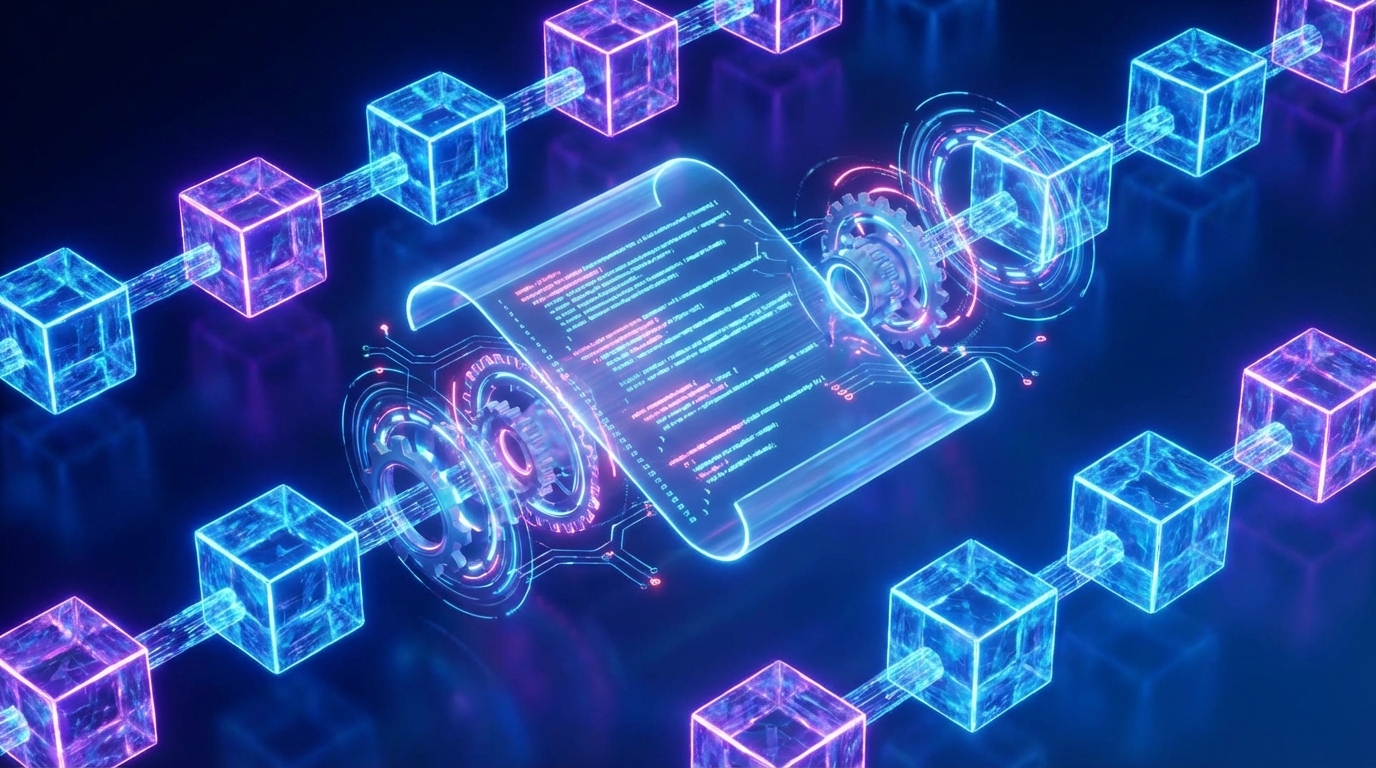
What Are Smart Contracts?
A smart contract is a self-executing program that lives on a blockchain. When predefined conditions are met, it automatically carries out the agreed-upon actions — no middlemen required.
Think of it like a digital vending machine. Insert a coin (input), press a button (condition met), and the drink comes out (execution). No clerk needed, and nobody can tamper with the outcome.
Traditional Contracts vs Smart Contracts
| Feature | Traditional Contract | Smart Contract |
|---|---|---|
| Intermediary | Lawyers, banks, notaries | None (code executes) |
| Execution | Manual by humans | Automatic when conditions are met |
| Speed | Days to weeks | Seconds to minutes |
| Transparency | Private between parties | Public on blockchain |
| Mutability | Can be amended by agreement | Immutable once deployed |
| Cost | Fees, labor costs | Only gas fees |
A Brief History
- 1994: Nick Szabo first proposed the concept of "smart contracts"
- 2015: Ethereum launched, making practical smart contracts possible
- 2020–2021: The DeFi boom drove explosive smart contract adoption
- 2023: ERC-4337 introduced account abstraction
- 2025: Ethereum's Pectra upgrade brought EIP-7702, giving every wallet smart contract capabilities
- 2026: AI-powered security tools emerge; over 40 million smart accounts deployed
How Do Smart Contracts Work?
The Lifecycle
1. Write Code → 2. Deploy to Blockchain → 3. User Triggers Transaction → 4. Auto-Execute → 5. Record Result
1. Write the Code
Developers define contract logic in a programming language. For example: "If User A sends 1 ETH, transfer 100 USDC to User B."
2. Deploy to the Blockchain
The compiled code is uploaded to the blockchain network. Once deployed, nobody can modify the code (immutability). This is the foundation of trust.
3. Trigger with a Transaction
Users interact with the smart contract by sending transactions. For example, swapping tokens on a DEX, or depositing collateral into a lending protocol.
4. Automatic Execution
When the predefined conditions are met, the code executes automatically. No human judgment or approval needed.
5. Record the Result
The outcome is permanently recorded on the blockchain. Anyone can verify it, and nobody can alter it after the fact.
Programming Languages
| Language | Blockchain | Key Features |
|---|---|---|
| Solidity | Ethereum, EVM chains | Most widely used; JavaScript-like syntax |
| Rust | Solana | High performance; memory safety |
| Move | Sui, Aptos | Asset-oriented design; strong security |
| Vyper | Ethereum | Python-like; simpler and more auditable |
Real-World Use Cases
1. DeFi (Decentralized Finance)
The largest application of smart contracts. As of March 2026, DeFi TVL stands at approximately $95.4 billion.
- Lending: Deposit collateral on Aave and loans are issued automatically with real-time interest calculation
- Trading: Uniswap's AMM handles token swaps without intermediaries
- Staking: Deposit ETH on Lido and receive stETH tokens automatically
2. NFTs and Digital Assets
Smart contracts manage NFT ownership, trading, and royalties.
- Unique token IDs are assigned automatically during minting
- Automatic royalty payments on secondary sales — artists earn from every resale
- Expanding to gaming items, memberships, and digital collectibles
3. RWA Tokenization
Smart contracts are the backbone of RWA (Real-World Asset) tokenization.
- Token issuance and ownership management
- Automatic distribution of interest, dividends, and rental income
- Transfer restrictions for KYC/AML compliance (ERC-3643)
4. Insurance
Payouts trigger automatically when conditions are verified.
- Automatic compensation for flight delays
- Crop insurance based on weather oracle data
- Instant processing without manual claims review
5. Supply Chain Management
Transparent tracking of goods throughout the supply chain.
- Each stage is recorded on the blockchain
- Automatic payment release upon delivery confirmation
- Tamper-proof provenance records
6. DAOs (Decentralized Autonomous Organizations)
Smart contracts encode organizational rules and decision-making.
- Token holders vote on proposals
- Funds are disbursed automatically based on vote outcomes
- No central authority required to run the organization
Smart Contracts in 2026: What's New
Account Abstraction
Smart contracts are revolutionizing crypto wallets themselves.
- ERC-4337: Smart accounts enabling gas sponsorship, social login, and batched transactions
- EIP-7702 (Pectra upgrade): Brings smart contract features to existing wallets
- Over 40 million smart accounts deployed as of 2026
- 100 million+ UserOperations processed — a 10x increase from 2023
This technology enables social recovery for lost seed phrases, batch transactions without signing each one, and gas abstraction to pay fees in any token.
AI × Smart Contracts
The breakout trend of 2026.
- OpenAI EVMbench: A benchmark for evaluating AI's ability to detect smart contract vulnerabilities
- AI Agents: Autonomous DeFi position management and portfolio rebalancing
- Predictive Security: AI tools that detect and prevent vulnerabilities before they're exploited
Risks and Limitations
Security Vulnerabilities
Smart contract hacks caused approximately $905 million in losses during 2025 alone. Notably, 90% of hacked projects had never been audited.
OWASP Smart Contract Top 5 Risks (2026)
| Rank | Risk Type | Description |
|---|---|---|
| 1 | Access Control Flaws | Unauthorized users executing privileged functions |
| 2 | Price Oracle Manipulation | Exploiting external price feeds to drain assets |
| 3 | Logic Errors | Business logic flaws causing unintended behavior |
| 4 | Flash Loan Attacks | Chaining uncollateralized loans for complex exploits |
| 5 | Reentrancy | Repeatedly calling a function to drain funds |
The Double Edge of Immutability
Code cannot be changed once deployed — a strength for trust but a weakness when bugs are found. Projects must design upgrade mechanisms (like proxy patterns) in advance.
Oracle Dependency
Smart contracts cannot access off-chain data (prices, weather, sports results) directly. They rely on oracles like Chainlink. If an oracle feeds incorrect data, the smart contract executes incorrectly.
How to Use Smart Contracts Safely
- Check audits: Verify the protocol has been audited by firms like Hacken, OpenZeppelin, or Trail of Bits
- Check TVL: Higher TVL generally indicates more battle-tested code
- Manage approvals: Use Revoke.cash to regularly revoke unnecessary smart contract approvals
- Test with small amounts: Try new protocols with small sums first
- Prefer open source: Prioritize projects with publicly verifiable, community-reviewed code
Conclusion
Smart contracts are the engine of the blockchain. DeFi, NFTs, RWA, DAOs — nearly every blockchain innovation runs on smart contracts. In 2026, account abstraction has dramatically improved user experience, while AI integration is elevating security and automation to new levels.
The concept is simpler than it sounds: "Code that executes automatically when conditions are met." This simple idea is transforming finance, insurance, logistics, and governance.
Disclaimer: This article is for informational purposes only and is not financial advice. When interacting with smart contracts, understand the security risks involved and use verified protocols. NFA/DYOR.