RWA Tokenization Explained: Real-World Assets on the Blockchain
Learn what RWA tokenization is, how it works, and which projects are leading the $25B market. A 2026 guide to tokenized bonds, gold, real estate and more.
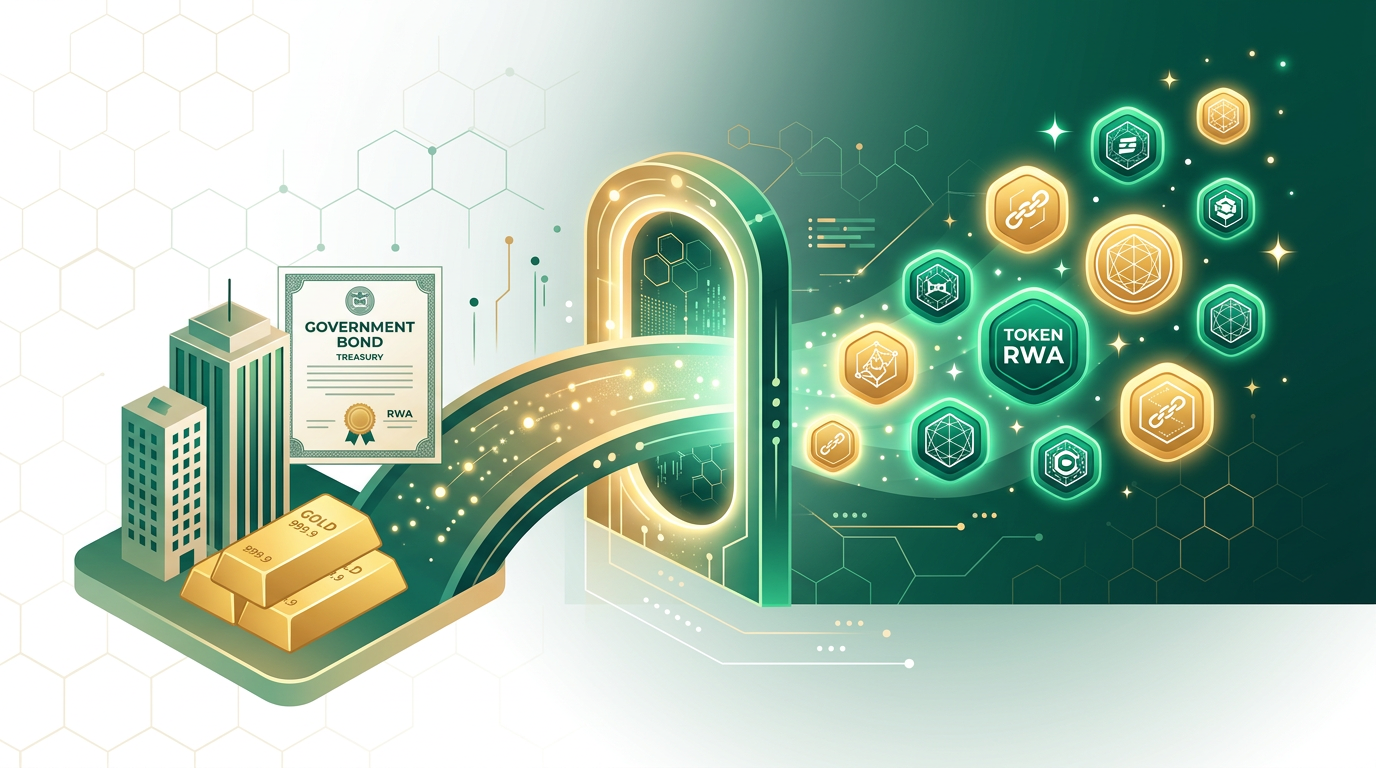
What Is RWA Tokenization?
RWA (Real-World Asset) tokenization is the process of converting physical assets into digital tokens on a blockchain. Real estate, government bonds, gold, and art can be issued as tokens — enabling 24/7 trading, fractional ownership, and automated yield distribution through smart contracts.
Think of it this way: a $1 million building can be divided into 10,000 tokens, each worth $100. These tokens trade freely on the blockchain, and rental income from the building is automatically distributed to token holders.
Why RWA Is Exploding Right Now
$25B and Counting — 4x Growth in One Year
As of March 8, 2026, the RWA tokenization market surpassed $25 billion. Just one year ago it stood at roughly $6 billion — nearly 4x growth.
- Tokenized U.S. Treasuries alone: $11 billion
- Underlying asset value: $365 billion
- McKinsey projects: $2 trillion by 2030 / BCG-Ripple: $16-20 trillion
Wall Street Is Leading
Unlike previous crypto cycles, this RWA boom is driven by traditional finance institutions.
- BlackRock: BUIDL fund at $2.9B AUM on Ethereum, expanding to Polygon/Arbitrum/Solana
- Franklin Templeton: Operating on-chain money market funds
- Morgan Stanley, Citi: Building blockchain custody and trading infrastructure
Regulatory Clarity
- EU MiCA: Full enforcement in 2026, providing a 27-country framework for RWA tokenization
- US CLARITY Act: Passed House 294-134, Senate deliberation ongoing
- South Korea STO Act: Targeting 2026 implementation for tokenized securities
- Singapore/UAE/Switzerland: Blockchain-friendly frameworks advancing
Types of Tokenized Assets
| Asset Type | Market Size | Key Projects | Revenue Model |
|---|---|---|---|
| Government Bonds | $11B+ (largest) | BlackRock BUIDL, Ondo OUSG | Interest yield |
| Gold/Commodities | $4B+ | Paxos PAXG, Tether XAUT | Price appreciation |
| Private Credit | Growing | Centrifuge, Maple Finance | Loan interest |
| Real Estate | Early stage | RealT, Lofty | Rental income + appreciation |
| Art/Collectibles | Early stage | Masterworks | Price appreciation |
How RWA Tokenization Works
The 6-Step Process
1. Asset Valuation → 2. Legal Structuring → 3. Token Issuance → 4. Compliance → 5. Market Trading → 6. Yield Distribution
1. Asset Valuation
Independent third parties assess the real-world asset's value.
2. Legal Structuring
An SPV (Special Purpose Vehicle) is established to custody the asset and guarantee token holders' legal rights.
3. Token Issuance
Tokens are minted on the blockchain, typically using Ethereum's ERC-20 or the compliance-oriented ERC-3643 standard.
4. Regulatory Compliance
Transfer restrictions ensure only KYC/AML-verified investors can trade.
5. Market Trading
Tokens trade on DEXs, OTC markets, or dedicated secondary platforms — 24 hours a day, unlike traditional markets.
6. Yield Distribution
Smart contracts automatically distribute interest, dividends, or rental income to token holders.
Leading RWA Projects
BlackRock BUIDL
The world's largest asset manager's tokenized money market fund.
- AUM: $2.9 billion
- Chains: Ethereum, Polygon, Arbitrum, Solana
- Invests in U.S. Treasuries for stable returns
- Institutional-grade security and compliance
Ondo Finance
The leading tokenized Treasuries protocol.
- OUSG: Tokenized short-term U.S. Treasuries
- USDY: Yield-bearing stablecoin backed by U.S. Treasuries
- Trending on CoinGecko, integrated with MetaMask
Paxos Gold (PAXG)
Each token is backed 1:1 by one troy ounce of physical gold.
- Stored in London vaults
- Tokenized gold market surpassed $6 billion (March 2026)
- Surging on geopolitical safe-haven demand
- Full tokenized gold guide: PAXG vs XAUT comparison →
Plume Network
A Layer 1 blockchain purpose-built for RWA.
- Trending on CoinGecko (+24.65%)
- Built-in compliance and RWA-optimized infrastructure
- Supports diverse asset types
How RWA Impacts DeFi
RWA tokenization is creating new possibilities when combined with DeFi.
DeFi Collateral
Tokenized Treasuries can serve as collateral in lending protocols. Stable real-world assets as collateral improve protocol security.
Source of Real Yield
While early DeFi yields depended on token inflation, RWA brings yield from actual economic activity — Treasury interest, rental income — on-chain.
Yield-Bearing Stablecoins
Stablecoins pegged to U.S. Treasury yields (like USDY) let holders earn 4-5% APY simply by holding them.
RWA Risks and Challenges
Regulatory Uncertainty
Securities, commodities, and currency definitions vary by jurisdiction. A token that's legal in one country may be classified as an unregistered security in another.
Oracle Dependency
RWA tokens rely on oracles to relay off-chain asset prices and status to the blockchain. Faulty oracle data can impact token values.
Liquidity Risk
RWA token secondary markets are still nascent compared to traditional finance. You may not be able to sell at your desired price and time.
Custody Risk
While tokens live on the blockchain, the underlying assets are held by real-world custodians. Custodian insolvency or misconduct is a real risk.
Smart Contract Risk
Bugs in the smart contracts managing token issuance and yield distribution can lead to fund losses. Always verify that projects have been audited.
RWA Investment Checklist
Before investing in RWA tokens, verify:
- Tokens are legally backed by the underlying asset
- Issuer has proper regulatory licenses and audit reports
- Secondary market liquidity is adequate
- Custodian is reputable (check insurance coverage)
- Smart contracts have been audited
- Securities regulations in your jurisdiction are understood
- Fee structure is clear (issuance, management, redemption fees)
The Road Ahead
RWA tokenization is where crypto meets the real world. With BlackRock participating, governments building regulatory frameworks, and the market surpassing $25 billion, RWA has moved beyond experimentation into financial infrastructure.
The combination of DeFi's programmability and traditional finance's stability positions RWA tokenization to fundamentally reshape how we access and interact with financial markets.
Disclaimer: This article is for informational purposes only and is not financial advice. RWA token investments carry regulatory, liquidity, and custody risks. Always conduct your own research and consult professionals before investing. NFA/DYOR.